
Why would a publisher write a puff piece about a campfire confection? Three reasons:
First, like so many good things, its origin can be traced to a book. The recipe, originally called “Some Mores,” shortened later to S’mores, was published ninety-nine years ago in Tramping & Trailing with the Girl Scouts.
The book, now housed at the University of Wisconsin archives, begins with a verse about gypsy weather by Mary Carolyn Davies and from there, tramps its way right into your heart. Readers can’t help but delight in its bounty of helpful tips—always have a safety pin, be sure to wear the right shoes, and never ruin others’ fun—as the author teases Mary for being indecisive and chides Alice for forgetting the salad dressing.
No overly sweet “how to” publication, the guide offers stern advice (attention helicopter parents): Making detailed plans “to provide for every minute of the outing,” is advised, however, such plans are ONLY to be used as a fall back, regardless of any “unexpected adventures, or changes of weather and mood.”
Second, like all great classics, from Shakespeare to Scrooge, S’mores have stood the test of time. The three basic ingredients—marshmallows, graham crackers, and chocolate—had been around for years, but converged spectacularly in the 1920s.
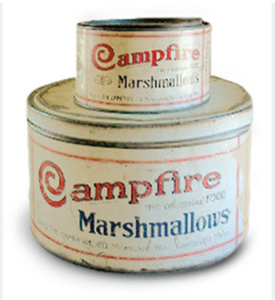
Sweets made from the marsh mallow plant date back to ancient Egypt, but were reserved for the Pharaohs. Fast forward a millenia or two when Milwaukee’s Imperial Candy Company began mass producing marshmallows in 1917, suggesting consumers roast them over open fires. To promote this concept, Imperial christened their product Campfire Marshmallows and packaged them in tins.
In 1829, Reverend Sylvester Graham, espousing a bland vegetarian diet to suppress impure thoughts and sinful bodily urges, led a movement to eliminate rich foods, spices, and white flour. His sinfree diet centered on flavorless, coarsely ground wheat crackers, i.e., Graham crackers.
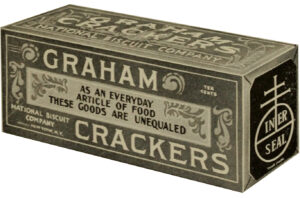
Pacific Coast Biscuit Company to the rescue! Repositioning the cracker more as a treat than an antidote for wickedness, their recipe included sugar. Later acquired by National Biscuit Company, the company introduced Honey Maid Graham Crackers in 1925.
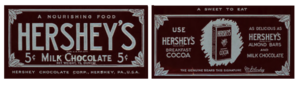
For centuries, chocolate has been part of a soldier’s rations. Touted as a high-energy food “more sustaining than meat,” chocolate proved a valuable way to fuel troops. After WWI, soldiers returned with a major sweet tooth. Companies like Hersheys satisfied their cravings, selling mass-produced chocolate bars for a nickel.
So there we were, roaring through the 20s, three tempting comestibles on offer, and countless young girls filled with the desire “to go adventuring.” As they tramped “away from paved roads and the hum of motors to meet the joys and mysteries of out-of-doors” they worked up quite an appetite. Alice remembered the crackers, Mary tucked a tin of marshmallows in her haversack, and Joyce stowed a few bars of chocolate in hers, a campfire was lit, and the rest is history.The third reason to take note of this seemingly fluffy holiday—it’s our duty.
According to Google, AI, and other current powers that be, a book publisher’s ethical duty is to protect the integrity of the public record, support free expression, and circulate helpful, inspiring material. Publishers “bridge the gap between creative freedom and public trust.”
Tramping & Trailing with the Girl Scouts provides a delightful bridge, linking us to the past when things were different, and yet, very much the same. We hope, after reading this, you feel inspired to take a tramp yourself today. Maybe you can light a fire—literally or figuratively.
If it’s the former, by all means find a stick, roast a marshmallow, and put it between some graham crackers and a square of chocolate. Beware, though. The treat may be called “Some More,” but the guide cautions: “one is really enough.”